Pages

Showing posts with label Britain. Show all posts

Saturday, 23 February 2013

The Anglo-Zanzibar War 1896 - The 40 Minute War

When it comes to the length of a war, none takes the title of a Shorter War than the Anglo-Zanzibar War of 1896, which was part of the greater Scramble for Africa by the European Empires , it lasted all of 38 minutes.

Zanzibar is an Island in the Indian Ocean, off the coast of Tanganyika, today it forms part of the Tanzania. The main Island, Zanzibar, is under the nominal control of the Sultans of Oman since 1698. Prior to this, Zanzibar was a Portuguese colony from 1499.

The Island of Zanzibar and the United Kingdom, were allies in the Scramble of Africa, as the British had recognized the sovereignty  of the Island state in 1886, and were using it as a refuelling depot. The main challenger for East Africa to Britain was Germany. Sultan Khalifah granted the British land rights in Kenya and granted the Germans land rights in Tanganyika. This resulted in some unrest between Britain and Zanzibar. The Germans who did not show their respect of the Zanzibar Sultanate, refused to fly the Sultanate flag over their territory leading to armed unrest between German troops and local populations.

In 1890, Sultan Ali declared Zanzibar a British protectorate and appointed a British first minister to lead his cabinet.  This position gave the British a veto vote over any future appointments of sultans. The same year, a spheres of interest in East Africa, causing more unrest between the British and Germans. In 1893, Ali's reign as Sultan was over and Sultan Hamad was appointed Sultan, and was very pro-British.

On August 25th 1896, Sultan Hamad died suddenly, and his nephew Khalid bin Bargash, was pro-German and was suspected by some as assassinating Hamad. Barhash moved into the palace complex in Zanzibar, without British approval. The British preferred Hamud bin Muhammed over Barhash. The British issued an ultimatum to Barhash to leave the palace and respect the Treaty of Ali. At the same time the HMS Thrush anchored itself off the coast of Zanzibar to show British force in the area.

On August 26th, to increase the British presence off the island, the HMS Racoon, St. George, and Philomel anchored  with the HMS Thrush. The Sultan took posession of the HHS Glasgow and sent it out to sea to attempt and show his power, but just became surrounded when the HMS Sparrow arrived and the British increased their ultimatum to war if Barhash did not leave the Royal Palace.

File:Anglo-Zanzibar War without gunfire.svg

On August 27th, the Ultimatum expired at 9am local time and General Lloyd Mathews ordered the British ships begin their bombardment of the island. At 9:02, HMS Racoon, Thursh and Sparrow opened fire at the Royal Palace.  At 9:05, the Glasgow engaged the St. George which was futile, and once the St. George retaliated, the Glasgow sank.

38-Minutes after the battle began the British with 1000 troops  controlled the town and had installed Muhammed as Sultan. The British removed many of the powers the Sultan had prior to this conflict.

In the end more than 500 Zanzibarians were killed, 1 Royal Yacht was sunk, 2 other boats were sunk, and 1 shore battery gun was destroyed. The British casualty list included 1 wounded. This odd conflict was over as quickly as it started.

Remembering History - The Anglo-Zanzibar War 1896 - The 40 Minute War

Thursday, 12 July 2012

The Centurion Tank - A Life of Long Service


When examining the military industrial complex, those who approve military spending on vehicles and weaponry should take a lesson from the Centurion Tank, as its service to the British Army lasted more than half a century.


First introduced in late 1945, as Britain's main battle tank for the post-WWII era. The design process for the tank began in 1943, with British Generals hoping the tank would see service in Europe before the end of the war. Six prototypes made it to mainland Europe, 1 month after the German surrender in May of 1945. 

It would not be long before the Centurion could prove its worth on the battlefield. In 1950 with the outbreak of the Korean War, the Centurion was shipped to the Korean peninsula to support British and UN troops in their battle against communism. When the tanks first arrived, it was sub-zero, with heavy amounts of snow on the ground. Tank crews feared that the Centurion would have difficulty navigating through snow, and freezing temperatures. Surprisingly, despite not having been greatly tested in winter conditions, the Centurion out performed all other UN tank and tracked vehicles while in Korea.

Following Korea, the British would deploy the Centurion on multiple occasions to the Middle East, including, but not limited to, The Suez Crisis of 1956, The Six Day War (1967), Yom Kippur War (1973), and The First Gulf War under Operation Desert Storm. The British army would also deploy the Centurion during the Falklands War in the 1980s before it was retired from the British Army in the mid 1990s.

India would operate a Centurion model during its Indo-Pakistan War of 1965 with great success, as well as during the Liberation of Bangladesh in 1971.

South Africa would deploy former British Centurions during the Angolan Civil War (1975)

Australia, would send the Centurion into one of the most heavily contested wars of the 2oth Century, Vietnam. At first the Australian tank crews had great difficulty navigating the jungle territory that is Vietnam, and it took a few disastrous defeats before crews learned how to protect their exposed side armour plating, as well as how to keep the mud and plant-life out of the tracks to keep the tanks moving. Once tanks crew learned how to operate the Centurion in Vietnam, it became a deadly machine on the battlefield, as it had done numerous times before.

A Few African countries still operate the original design Centurion. All Western nations that once operated it, retired their remaining Centurions in the late 1990s, and have replaced it with the Leopard Tank, a tank that may just rival the Centurion in a few decades as the longest serving tank

Remembering History - the Centurion Tank

Thursday, 5 July 2012

The "Seven Years War" as the First World War

After being approached by a student to help study for the AP  (Advanced Placement) exam, I was set on a study course reviewing the "Seven Years War" and realised, that it was truly the First World War. I state this, in no way meaning any disrespect for the Great War, now commonly known as the First World War, but in a revisionist way to prove that the "Seven Years War" was a world war.

 The Defeat of the French Fireships attacking the British Fleet at Anchor before Quebec, 28 June 1759 The Canadian War Museum  
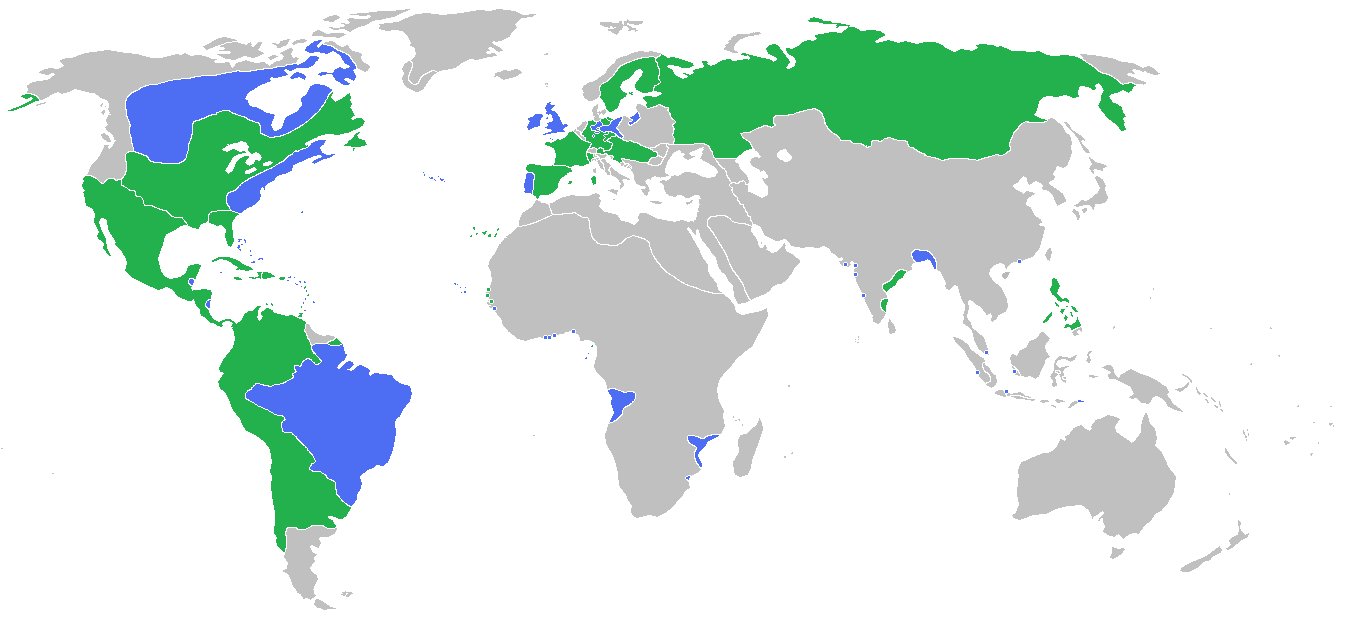
Militarily speaking, the Seven Years War was truly a World War. Just look at the basics of the conflict. It took part between 1756 and 1763, and included almost every great power of the time, and battles raged in Europe, North America, Central America, West Africa, India and in the Philippines. Just the geographic locations of the Seven Years, by definition make the conflict a World War.

If you have never heard of the Seven Years War, it may be because historiography in every country involved has given the conflict a number of alternative names based on the theatres of combat.
  • Known as the French-Indian War (1754-63) in North America (France, Britain, and the Iroquois)
  • Known as the Pomeranian War (1757-63) in Sweden and Prussia
  • Known as the Third Carnatic War (1757-63) on the Indian subcontinent
  • Known as the Third Selesian War (1756-63) in Prussia (yes, they have two names for one war) and Austria.
  • Known as the Spanish-Portuguese War (1761-63) in Spain and Portugal
  • Known as the Anglo-Spanish War (1761-63) in Britain, in their war against Spain.
  • and; known as the War of the Conquest (1754-63) in French Canada (Quebec)
If you are scratching your head because the math does not work out, 1754 to 1763 is 9 years, and not 7, your math is correct. The name, The Seven Years War was selected because The Nine Years War was already taken for a war between Louis XIV of France and a European Coalition (1688-1697).

The war began with the divide between Great Britain (The Hanover's) and France and Spain (The Bourbons), as well as the divide between the Prissian's (The Hozenzollerns) and Austria (The Habsburgs). These divides, as well as numerous alliance systems would divide the world and their colonies against each other.

First Alliance:
  • Kingdom of Prussia
  • Kingdom of Great Britain
  • Electorate of Hanover
  • Brunswick-Wolfenbuttle
  • Iroquois Confederacy
  • Kingdom of Portugal
  • Landgraviate of Hesse-Kessel
  • and; Schaumburg-Lippe
Second Alliance:
  • Kingdom of France
  • Habsburg Monarchy
  • Russian Empire
  • Kingdom of Spain
  • Kingdom of Sweden
  • Electorate of Saxony
  • Mughal Empire
File:SevenYearsWar.png
A Map of the Alliance System during the Seven Years War (CC BY 3.0)
Without going into great detail on the War, because you can read a book on that, my intent is just to showcase the global affects of the Seven Years War, thus proving that it was technically the First World War.

UPDATE: There are some that believe that The Seven Years War cannot be considered a World War because it did not include what has become known as "Total War" where the entire societal apparatus is used to further the war effort. I disagree that this is a requirement for a World War. When I use the term, World War, I am discussion geographic combat, and in that sense, the Seven Years War, was a World War.
The War ended with four treaties:

  1. The Treaty of Saint Petersburg (1762) - Which ended the Seven Years War between Prussia and Russia. It was a mutual agreement in the simplest terms to end the war with each other, so they could better fight their other enemies.
  2. The Treaty of Paris (1763) - Which ended the Seven Years war for Great Britain, Prussia, Portugal and their allies against France, Spain, Austria, Russia and their allies.
  3. The Treaty of Hubertusburg (1763) - Which ended the Seven Years war between Prussia, Austria, and Saxony. It was a side treaty of the Treaty of Paris (1763).
  4. The Treaty of Hamburg (1762) - Which ended the Seven Years War between Sweden and Prussia.
The war ended as most do, with territorial changes around the world. Much of Europe returned to its pre-war boundaries and conditions. It was the colonies that could change hands between Britain, France and Spain.
  • Great Britain would annexes (what would be) Canada (Then New France), Begal and Florida.
  • France would transfer Louisiana to Spain.
For more information on the Seven Years War, please read any of the following:
  • Northern Armageddon: The Battle of the Plains of Abraham by D. Peter MacLeod (2008)
  • The Seven Years War in Europe: 1756-1763 by Franz A.J. Szabo (2000)
  • Crucible of War: The Seven Years War and the Fate of Empire in British North America, 1754-1766 by Fred Anderson (2001)
  • The Global Seven Years War 1754-1763: Britain and France in a Great Power Contest by D.A. Baugh (2011)
  • Plus the many more great history books
The Seven Years War - Remembering History